Fasting Insulin and HOMA-IR: What They Can Tell You About Metabolic Health
Fasting glucose can look normal while insulin is already working too hard. Here is how fasting insulin and HOMA-IR fit into a thoughtful metabolic-health assessment.
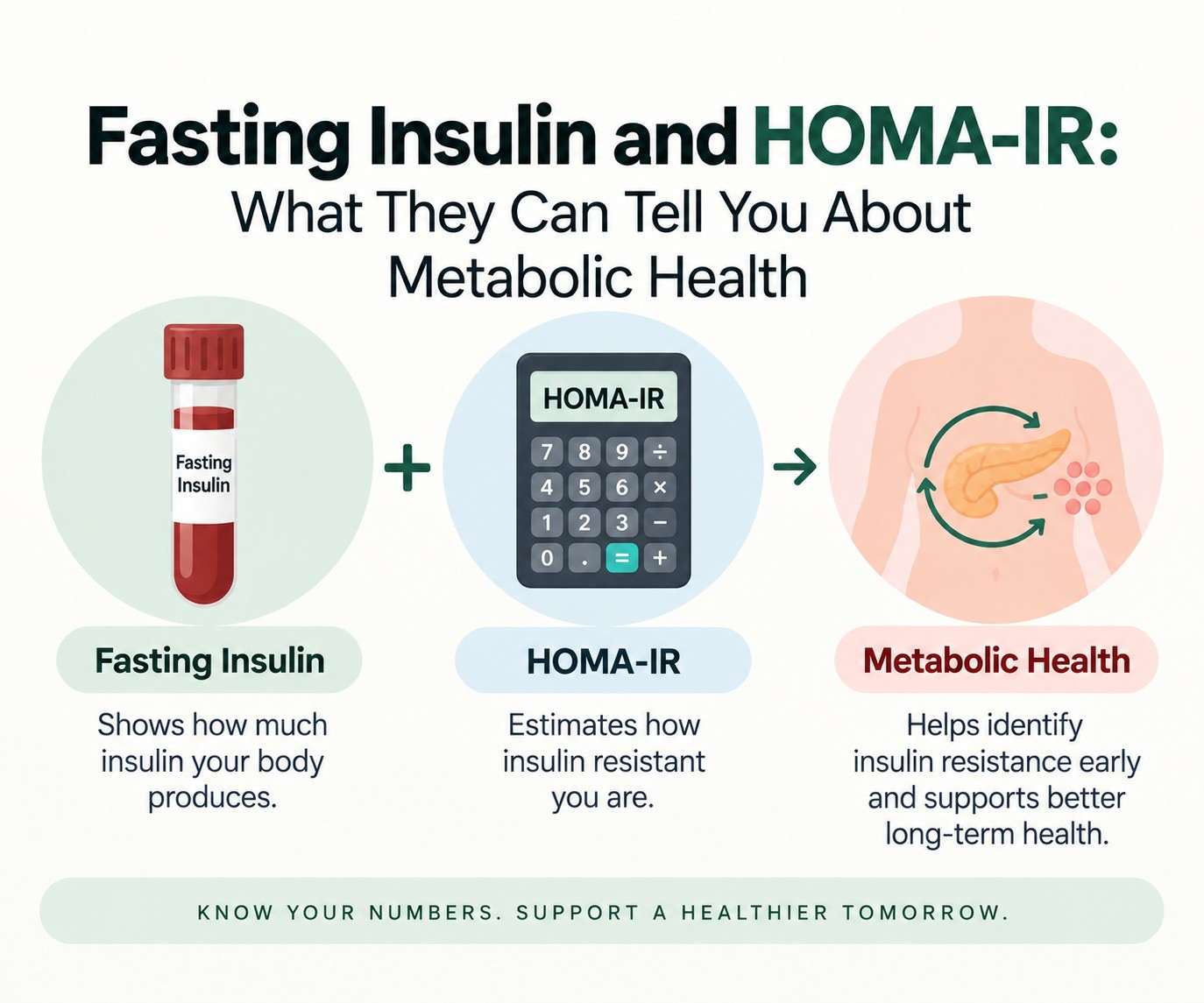
A normal fasting glucose result is often treated as reassurance that metabolic health is fine. In reality, glucose can stay in a completely normal range for years while insulin quietly climbs in the background, as the body works harder and harder to keep blood sugar controlled. Fasting insulin, and the HOMA-IR calculation derived from it, is one of the few widely available tests that can reveal this hidden compensation long before glucose itself becomes abnormal.
Why Glucose Alone Misses Early Insulin Resistance
Insulin resistance develops gradually. In the earliest stage, the pancreas simply produces more insulin to overcome reduced sensitivity in muscle, liver, and fat tissue, and this extra insulin is often enough to keep glucose looking entirely normal on a standard test. Only once the pancreas can no longer keep pace does fasting glucose start to drift upward, by which point insulin resistance has usually been present for years. Relying on glucose alone as a screening tool means missing this entire earlier window.
What Fasting Insulin Actually Measures
Fasting insulin is a simple blood test, taken after an overnight fast, that measures how much insulin is circulating when glucose is not actively being challenged by a meal. In someone with good insulin sensitivity, a relatively small amount of insulin is enough to keep fasting glucose normal. In someone with insulin resistance, considerably more insulin is required to achieve the same result, and that extra insulin shows up directly in the fasting insulin number.
What HOMA-IR Adds to the Picture
HOMA-IR (Homeostatic Model Assessment of Insulin Resistance) combines fasting glucose and fasting insulin into a single calculated score, giving a more complete estimate of insulin resistance than either number alone. The formula is fasting insulin (μIU/mL) multiplied by fasting glucose (mg/dL), divided by 405. Lower scores generally indicate better insulin sensitivity, while higher scores indicate greater resistance, though exact cutoffs vary somewhat between laboratories and populations, which is why the trend over time often matters as much as a single number.
Why This Matters Beyond Diabetes Risk
Insulin resistance is not only a precursor to type 2 diabetes. It is mechanistically linked to fatty liver disease, elevated triglycerides, higher blood pressure, PCOS, and increased cardiovascular risk, often years before any of these conditions are formally diagnosed. Catching elevated fasting insulin and HOMA-IR early opens a genuinely wide window for lifestyle intervention, at a stage when changes tend to be more effective and complications have not yet developed.
Who Should Consider Testing
Fasting insulin and HOMA-IR are particularly useful for people with a family history of type 2 diabetes, a personal or family history of PCOS, central weight gain even without a high overall BMI, fatigue after meals, or a lipid panel showing high triglycerides with low HDL, a pattern often associated with insulin resistance. It is also a reasonable addition for anyone undergoing a general metabolic health checkup, not only those with obvious risk factors, since insulin resistance can be present in people who appear otherwise healthy.
Interpreting Your Result in Context
A single fasting insulin or HOMA-IR value is useful, but it is more informative alongside other markers, including fasting glucose, HbA1c, lipid profile, and waist circumference, as covered in our related article on the metabolic health checkup and biomarkers beyond HbA1c. A physician reviewing the full picture together can distinguish between an isolated, less concerning finding and a pattern that warrants closer attention or intervention.
What Actually Improves Insulin Sensitivity
The interventions with the strongest evidence for improving insulin sensitivity are consistent: reducing refined carbohydrate and added sugar intake, regular physical activity including resistance training, adequate sleep, and, where relevant, meaningful weight loss, particularly reduction of visceral fat. These same principles are covered in more depth in our articles on muscle as a longevity organ and sleep and insulin resistance, both of which directly affect the mechanisms fasting insulin and HOMA-IR are measuring.
Retesting and Tracking Progress
Because fasting insulin and HOMA-IR reflect a physiological process that changes gradually, retesting every three to six months after starting a targeted intervention is generally more useful than a single test in isolation. A falling HOMA-IR over time is one of the more encouraging signs that lifestyle changes are producing a genuine metabolic effect, often before weight or other visible markers shift substantially.
Limitations Worth Knowing
Fasting insulin assays can vary somewhat between laboratories, so comparing results across different labs over time should be done cautiously, ideally using the same laboratory for repeat testing. HOMA-IR is also a model, not a direct measurement of insulin action in tissue, so it is best interpreted as a useful screening and tracking tool within a broader clinical picture, not a definitive diagnostic test on its own.
Check Your Fasting Insulin and HOMA-IR
Frequently Asked Questions (FAQs)
1. Do I need to fast for both glucose and insulin testing?
Yes, both tests are typically drawn together after an overnight fast of eight to twelve hours to ensure an accurate HOMA-IR calculation.
2. Can HOMA-IR be normal even with a family history of diabetes?
Yes, family history increases risk but does not guarantee insulin resistance is already present; testing gives an individual answer rather than relying on family history alone.
3. Is a high fasting insulin always a sign of diabetes risk?
Not necessarily diabetes specifically, but it does indicate reduced insulin sensitivity, which is worth discussing with a physician regardless of current glucose levels.
4. Can weight loss lower HOMA-IR even without reaching a "normal" BMI?
Yes, meaningful improvements in insulin sensitivity, and corresponding HOMA-IR reduction, can occur with moderate weight loss, particularly loss of visceral fat, even before BMI reaches a specific target.
5. How often should HOMA-IR be retested?
Every three to six months is a reasonable interval when actively working on insulin sensitivity, though your physician may adjust this based on your specific situation.
6. Is fasting insulin testing widely available?
Yes, it is a standard blood test available at most laboratories, though it is not always included in routine panels unless specifically requested.
7. Can HOMA-IR be elevated in someone with a normal BMI?
Yes, insulin resistance is not reliably predicted by BMI alone, and people with normal BMI but higher visceral fat can still show elevated HOMA-IR.
This article is for educational purposes and does not replace personalized medical advice. Please consult a qualified physician before making changes to your treatment, medication, or health screening plan.