Why Muscle Is a Longevity Organ: Strength, Glucose Control, and Healthy Ageing
Muscle is not only for movement. It supports glucose control, mobility, bone health, and resilience as we age.
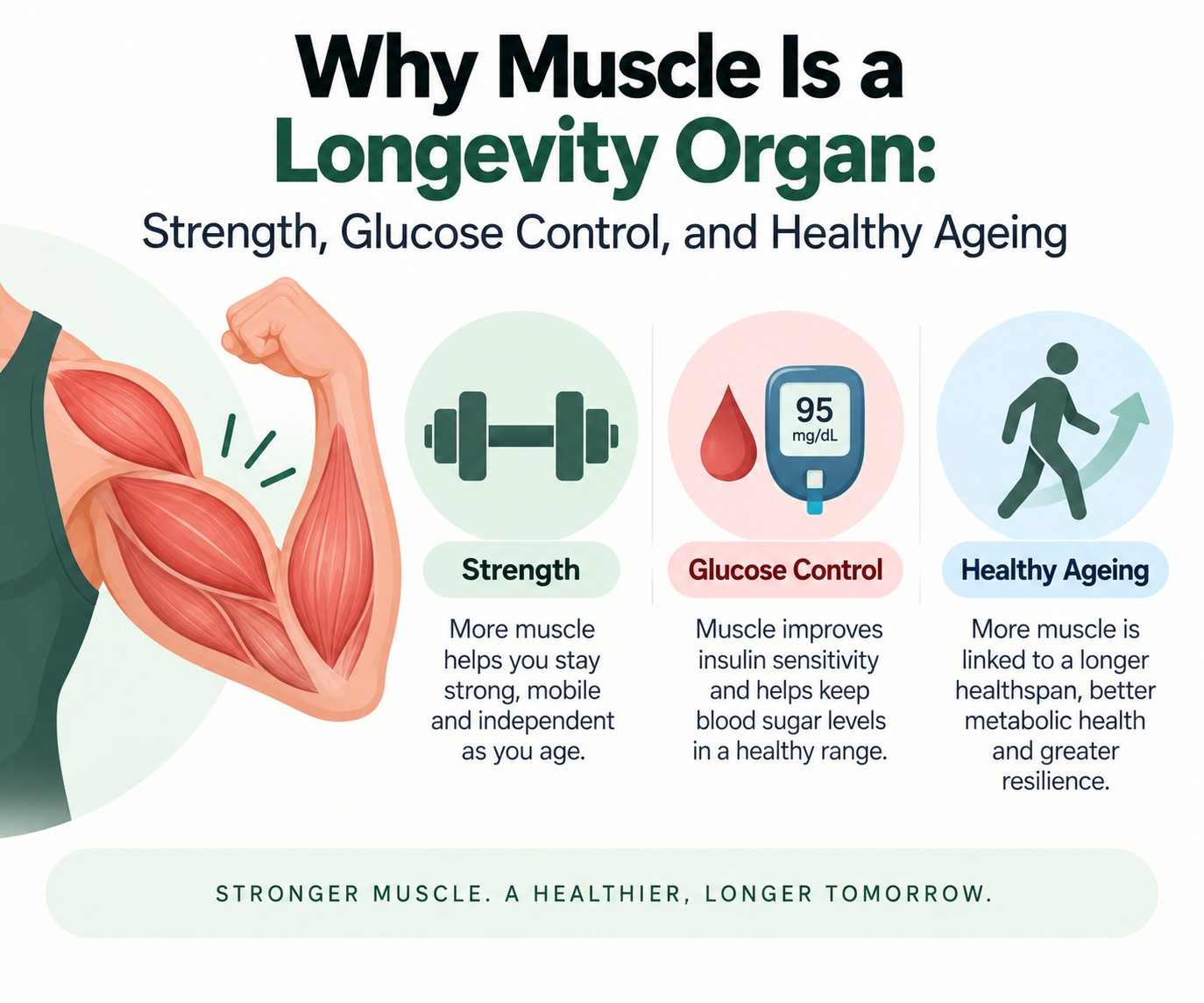
Muscle is usually thought of in terms of appearance or athletic performance, but a growing body of research treats skeletal muscle as something closer to an endocrine organ, one that plays an active role in glucose regulation, metabolic health, and long-term survival. Maintaining muscle mass and strength through midlife and beyond is one of the most consistently supported, modifiable predictors of healthy ageing available.
Muscle as the Body's Largest Glucose Reservoir
Skeletal muscle is the primary site for glucose disposal after a meal, absorbing a large share of circulating glucose in response to insulin. More muscle mass means more capacity to clear glucose efficiently, directly improving insulin sensitivity. This is one of the key mechanisms connecting muscle mass to the fasting insulin and HOMA-IR markers covered in our article on fasting insulin and metabolic health.
Sarcopenia: The Quiet Loss of Muscle With Age
Sarcopenia, the age-related loss of muscle mass and strength, typically begins in the thirties and accelerates from the fifties onward if not actively countered through resistance training. Because it progresses gradually, many people do not notice meaningful loss of strength until it has already affected daily function, difficulty rising from a low chair, carrying groceries, or climbing stairs without effort. By the time these changes are noticeable, a substantial amount of muscle mass and glucose-handling capacity may already have been lost.
The Link Between Muscle Loss and Metabolic Disease
As muscle mass declines, the body's capacity to clear glucose from the bloodstream after meals declines with it, contributing to rising insulin resistance even without significant weight gain. This is part of why older adults can develop insulin resistance and prediabetes despite stable or even decreasing body weight, a pattern that a simple focus on weight alone would miss entirely.
Muscle and Fall Risk in Older Age
Beyond metabolic effects, reduced muscle strength is one of the strongest predictors of fall risk in older adults, and falls remain a leading cause of serious injury and loss of independence later in life. Grip strength specifically has repeatedly been shown in large studies to correlate with overall health outcomes and mortality risk, making it a genuinely useful, easily measured proxy for broader muscular health.
How Much Resistance Training Is Actually Needed
Research consistently supports two to three resistance training sessions per week, targeting major muscle groups, as sufficient to meaningfully slow or reverse age-related muscle loss for most adults. This does not require an elite athletic training programme; consistent, progressive loading of muscles, gradually increasing resistance as strength improves, over months and years is what actually produces durable results, far more than sporadic, intense efforts.
Protein Intake Alongside Training
Resistance training alone is less effective without adequate protein intake to support muscle repair and growth. Older adults in particular often need more protein per kilogram of body weight than younger adults to achieve the same muscle-building response, a topic covered in more depth in our related article on protein and strength training for healthy ageing. Under-eating protein while ageing is one of the most common, correctable contributors to accelerated muscle loss.
It Is Never Too Late to Start
One of the most encouraging findings in this area of research is that muscle responds to resistance training at essentially any age. Studies involving adults in their seventies and eighties beginning structured resistance training for the first time have shown measurable improvements in strength and function within months, directly challenging the assumption that muscle loss is simply an unavoidable, unmodifiable part of ageing.
Practical Ways to Start
For those new to resistance training, starting with two sessions a week using body-weight exercises, resistance bands, or light weights, focusing on major muscle groups (legs, back, chest, shoulders, core), is a reasonable and safe starting point. Progression, gradually increasing resistance or repetitions as exercises become easier, matters more than intensity in any single session. A physiotherapist or qualified trainer can help design a programme appropriate for existing joint or health conditions.
Tracking Progress Beyond the Scale
Because muscle is metabolically valuable in ways the scale cannot capture, tracking strength (how much weight can be lifted, how many repetitions can be completed) and, where available, body composition rather than weight alone gives a far more accurate picture of whether a training programme is working. This mirrors the broader theme covered in our article on biomarkers beyond HbA1c: the most useful health metrics are often not the ones most commonly tracked by default.
Build a Muscle and Metabolic Health Plan
Frequently Asked Questions (FAQs)
1. At what age does muscle loss typically begin?
Sarcopenia generally begins in the thirties and accelerates from the fifties onward if resistance training is not part of a regular routine.
2. Can muscle loss be reversed once it has started?
Yes, to a meaningful degree, at essentially any age, with consistent resistance training and adequate protein intake, even for people who have not trained before.
3. Is walking enough to maintain muscle mass?
Walking supports cardiovascular health but does not provide the resistance stimulus needed to build or maintain significant muscle mass; dedicated resistance training is generally required alongside it.
4. How does muscle mass affect blood sugar specifically?
Muscle is the primary site of glucose disposal after meals, so more muscle mass generally improves the body's capacity to clear glucose efficiently, supporting better insulin sensitivity.
5. Can older adults safely start resistance training for the first time?
Yes, with an appropriately designed programme, often starting with lighter resistance and close attention to form, older adults can safely begin and benefit from resistance training.
6. Is grip strength a reliable indicator of overall muscle health?
It is a commonly used research proxy that correlates well with broader strength and health outcomes, though it is one indicator among several rather than a complete assessment on its own.
7. How quickly can strength improve after starting resistance training?
Measurable strength gains are often seen within eight to twelve weeks of consistent training, though continued improvement typically requires ongoing, progressive training over months.
This article is for educational purposes and does not replace personalized medical advice. Please consult a qualified physician before making changes to your treatment, medication, or health screening plan.