Sleep and Insulin Resistance: Why Rest Is Part of Metabolic Care
Sleep is not optional recovery time. Poor or irregular sleep can affect appetite, glucose regulation, blood pressure, and everyday energy.
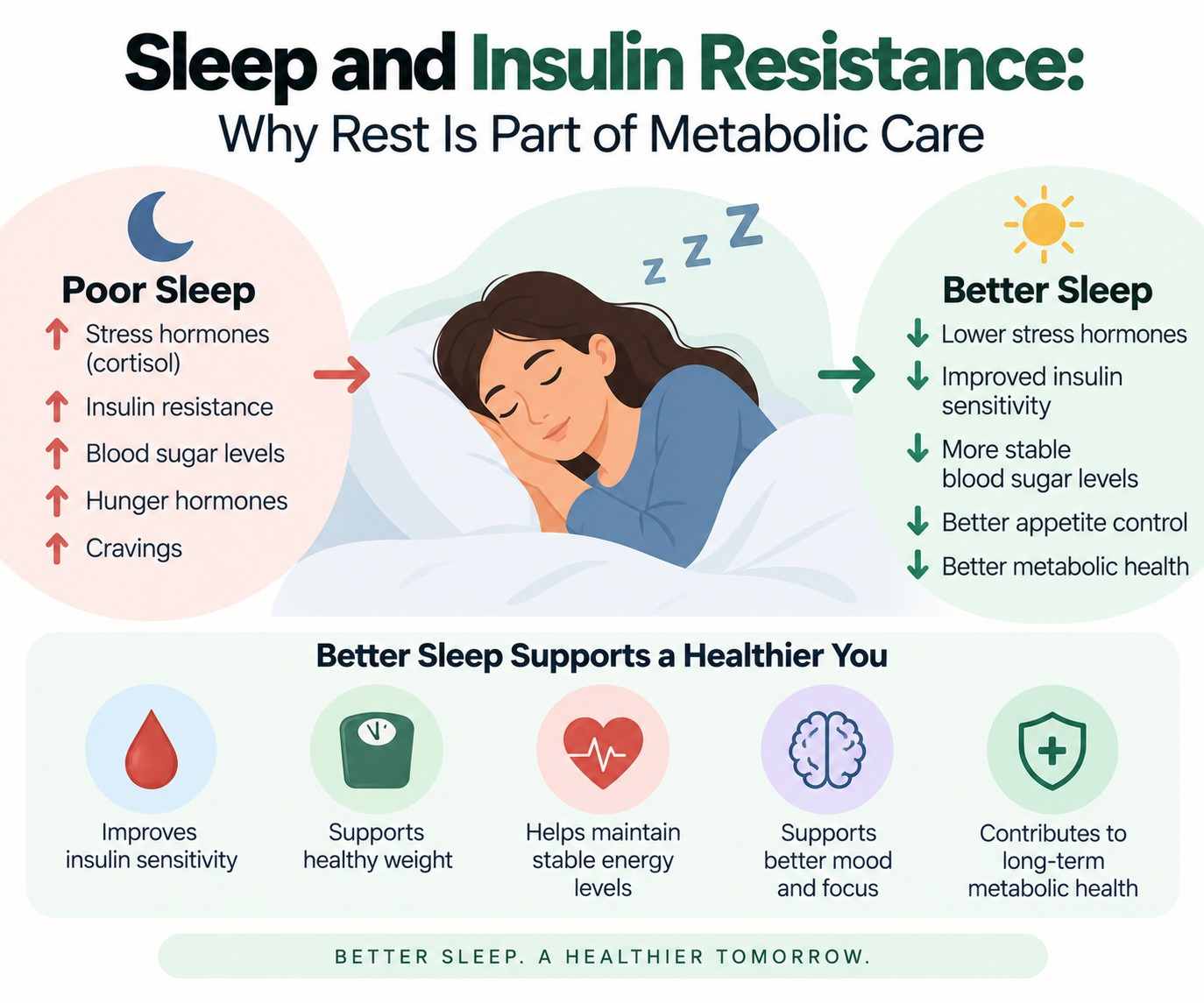
Diet and exercise dominate most conversations about metabolic health, while sleep is frequently treated as a separate, less clinically relevant lifestyle factor. The evidence does not support that separation. Poor sleep, whether too short, fragmented, or poor in quality, has a measurable, independent effect on insulin sensitivity, sometimes within as little as a few nights of disruption, making sleep a genuine, actionable part of metabolic care rather than a background lifestyle detail.
How Sleep Loss Impairs Insulin Sensitivity
Experimental studies restricting healthy adults to a few nights of short sleep have repeatedly shown measurable reductions in insulin sensitivity, comparable in some studies to changes seen after a period of significant weight gain, despite no change in diet or activity. Sleep restriction increases cortisol and sympathetic nervous system activity, both of which interfere with the body's normal insulin signalling, alongside increasing appetite hormones that make overeating more likely the following day.
Sleep Apnea: An Often Overlooked Contributor
Beyond simple sleep duration, obstructive sleep apnea, repeated pauses in breathing during sleep that fragment rest without the person always being aware of it, is independently associated with insulin resistance, type 2 diabetes, and cardiovascular risk. Sleep apnea is common and frequently undiagnosed, particularly in people carrying excess weight around the neck and abdomen, and it deserves consideration in anyone with unexplained insulin resistance, persistent daytime fatigue despite seemingly adequate sleep hours, or a partner reporting loud snoring or breathing pauses.
The Two-Way Relationship Between Sleep and Metabolic Health
The relationship runs in both directions. Poor sleep worsens insulin resistance, and insulin resistance itself can worsen sleep quality, through mechanisms including nighttime blood sugar fluctuations, increased inflammation, and a higher likelihood of conditions like sleep apnea that commonly co-occur with metabolic dysfunction. This creates a cycle where addressing only one side of the relationship, treating insulin resistance while ignoring poor sleep, or vice versa, often produces incomplete results.
How Much Sleep Actually Matters
Most research in this area points to a general target of seven to nine hours of sleep for adults, with both significantly shorter and, in some studies, unusually long sleep duration associated with worse metabolic outcomes. Consistency in sleep and wake times appears to matter nearly as much as total duration, since irregular sleep schedules disrupt circadian rhythms that themselves play a direct role in glucose regulation independent of total sleep time.
Circadian Rhythm and Glucose Metabolism
The body's internal clock directly influences insulin sensitivity across the day, with most people showing better glucose tolerance earlier in the day compared to late evening. This is part of why very late, large meals and irregular sleep-wake patterns, common with shift work or frequent late nights, are independently associated with worse metabolic outcomes, separate from total sleep duration alone.
Practical Steps to Improve Sleep for Metabolic Health
Consistent sleep and wake times, even on weekends, support circadian alignment more effectively than variable schedules. Limiting screen exposure and bright light in the hour before bed, keeping the bedroom cool and dark, and avoiding large meals, alcohol, and caffeine close to bedtime all support better sleep quality. For many people, these straightforward changes produce a measurable improvement in both subjective sleep quality and, over time, metabolic markers including fasting insulin, a connection explored further in our article on fasting insulin and HOMA-IR.
When to Consider a Sleep Study
Persistent loud snoring, witnessed breathing pauses during sleep, excessive daytime sleepiness despite adequate time in bed, or unexplained, treatment-resistant insulin resistance are all reasonable prompts to discuss a sleep study with a physician. Treating underlying obstructive sleep apnea, when present, can produce meaningful improvement in metabolic markers alongside the more obvious benefits to daytime energy and alertness.
Sleep Fits Within the Broader Metabolic Picture
Sleep should be considered alongside diet, exercise, and stress as one of the core, modifiable pillars of metabolic health, not a separate wellness topic disconnected from insulin resistance and glucose control. Our articles on muscle as a longevity organ and metabolic flexibility cover the other major pillars that, together with sleep, shape long-term metabolic outcomes.
What to Track Alongside Sleep Changes
For those making a deliberate effort to improve sleep as part of a metabolic health plan, tracking fasting insulin, HOMA-IR, and general daytime energy levels every few months gives a more concrete sense of whether the changes are producing a measurable metabolic effect, beyond simply feeling more rested.
Discuss Sleep and Metabolic Health
Frequently Asked Questions (FAQs)
1. How quickly can poor sleep affect insulin sensitivity?
Research has shown measurable reductions in insulin sensitivity after just a few nights of significantly restricted sleep, even without any change in diet.
2. Is sleep apnea only a concern for people who are overweight?
No, while excess weight around the neck increases risk, sleep apnea can occur in people at a normal weight as well, and should be considered whenever symptoms are present.
3. Does napping compensate for poor nighttime sleep?
Napping can partially offset sleep debt, but it does not fully replace the metabolic benefits of consistent, good-quality nighttime sleep.
4. Can improving sleep alone lower HOMA-IR without other changes?
For some people, meaningfully improving sleep can measurably improve insulin sensitivity, though it is generally most effective combined with diet and exercise changes rather than relied on alone.
5. What are signs that I might have undiagnosed sleep apnea?
Loud snoring, witnessed breathing pauses, gasping during sleep, and excessive daytime sleepiness despite adequate time in bed are common signs worth discussing with a physician.
6. Is oversleeping also linked to worse metabolic outcomes?
Some studies associate unusually long sleep duration with worse metabolic markers as well, though the relationship is less consistent than that seen with short sleep.
7. Does shift work make good metabolic health harder to achieve?
Yes, irregular sleep-wake patterns associated with shift work are independently linked to worse metabolic outcomes, making consistent sleep timing an important, if sometimes difficult, goal for shift workers.
This article is for educational purposes and does not replace personalized medical advice. Please consult a qualified physician before making changes to your treatment, medication, or health screening plan.