Top 15 Biomarkers Everyone Should Track for Healthy Aging
Discover the most important biomarkers that reveal how your body is aging. Learn what each marker means, why it matters, and how tracking biomarkers can help you make informed decisions for long-term health and longevity.
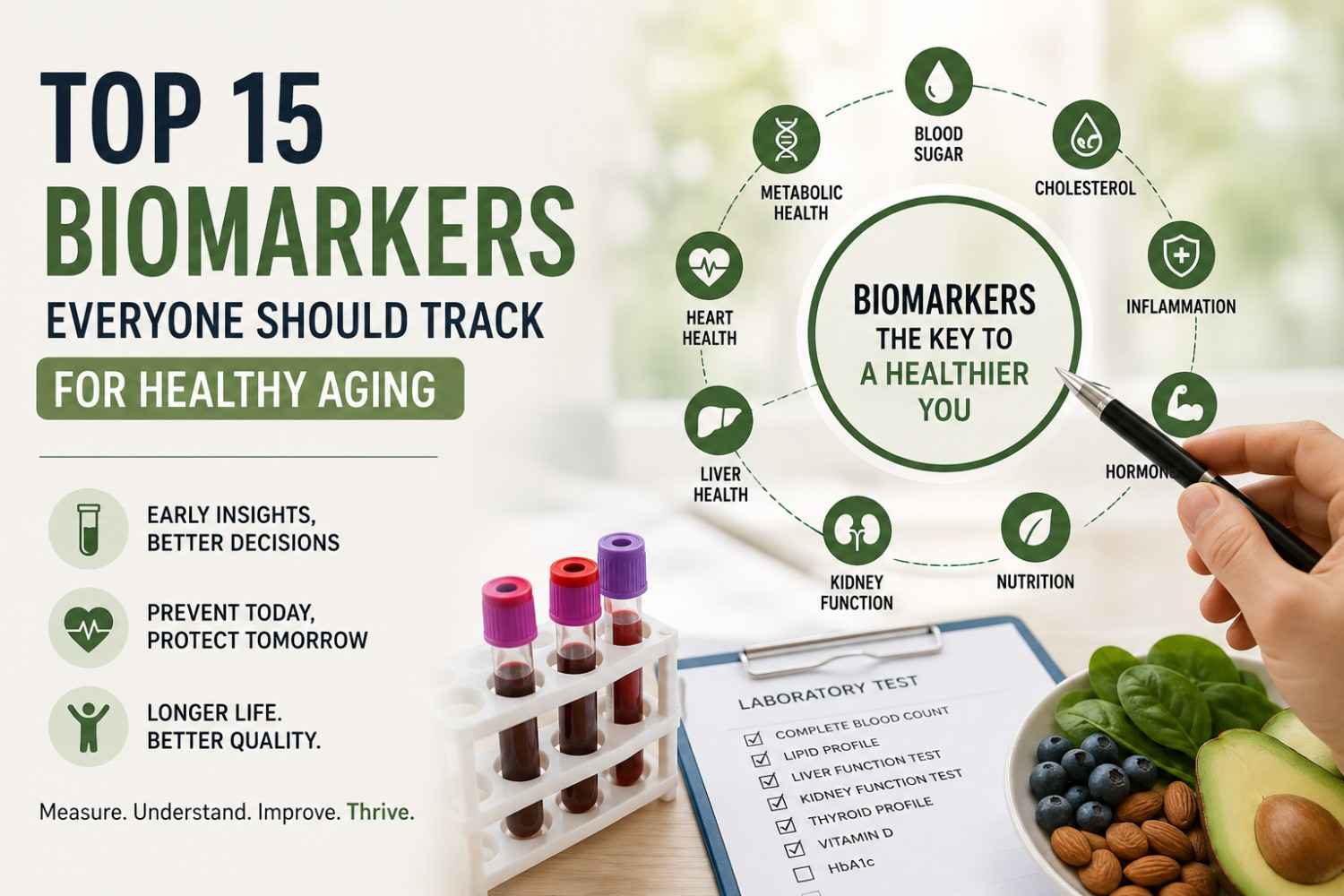
Most chronic diseases do not appear overnight. Long before symptoms develop, the body often begins sending measurable signals through changes in blood markers, hormones, inflammation levels, metabolic function, and organ performance. These measurable indicators are known as biomarkers, and they provide one of the clearest windows into your current health and your future health risks.
Rather than waiting until a health condition becomes obvious, biomarker testing allows individuals to understand what is happening inside the body early enough to make meaningful lifestyle and medical decisions. This shift from reactive healthcare to preventive healthcare is transforming how people approach longevity and healthy aging.
At Imedi Health, we believe that understanding your biomarkers is one of the most valuable investments you can make in your long-term wellbeing. When interpreted correctly, biomarkers can help identify metabolic dysfunction, nutritional deficiencies, cardiovascular risk, hormonal imbalance, inflammation, and other health concerns years before they progress.
If you're new to longevity medicine, we recommend reading our guide on What Is Longevity Medicine?, which explains how preventive healthcare is changing the future of medicine.
2. What Are Biomarkers?
Biomarkers are measurable biological indicators that reflect how your body is functioning. They may be measured through blood tests, urine analysis, imaging, genetic testing, or other diagnostic methods.
Think of biomarkers as your body's dashboard. Just as a vehicle's dashboard warns you before the engine fails, biomarkers can alert you to changes occurring inside your body long before noticeable symptoms develop.
Instead of relying solely on age or body weight, biomarkers provide objective information about inflammation, metabolism, cardiovascular health, liver function, kidney function, hormones, and many other aspects of health.
2. Why Biomarkers Matter for Healthy Aging
Aging is not determined only by the number of birthdays you've celebrated. Two individuals of the same chronological age may have very different metabolic health, cardiovascular function, cognitive performance, and overall resilience.
Regular biomarker testing helps identify small changes before they become significant problems. It allows healthcare professionals to personalize recommendations related to nutrition, physical activity, sleep, stress management, and medical interventions.
Improving metabolic health is one of the strongest predictors of healthy aging. You can learn more in our detailed guide on How to Improve Metabolic Health Naturally.
2. 1. HbA1c
HbA1c reflects your average blood glucose levels over approximately three months. Unlike a single fasting glucose measurement, HbA1c provides a broader picture of blood sugar control and is widely used to assess diabetes risk.
Persistently elevated HbA1c levels may indicate insulin resistance, increased cardiovascular risk, and metabolic dysfunction even before diabetes develops.
3. Why it matters
Early detection of insulin resistance
Assessment of long-term blood sugar control
Reduced risk of metabolic disease through early intervention
2. 2. Fasting Insulin
Many people have normal blood glucose while already developing insulin resistance. Measuring fasting insulin helps detect this earlier than glucose testing alone.
Elevated fasting insulin is associated with obesity, fatty liver disease, cardiovascular disease, and metabolic syndrome.
Individuals interested in sustainable weight management may also benefit from reading our Medical Weight Loss programs as well as our guide on Metabolic Reset.
2. 3. High-Sensitivity C-Reactive Protein (hs-CRP)
Chronic low-grade inflammation is increasingly recognized as a contributor to cardiovascular disease, diabetes, neurodegenerative conditions, and accelerated aging.
High-sensitivity CRP measures subtle inflammation that may otherwise go unnoticed.
3. Higher hs-CRP may indicate
Inflammation
Cardiovascular risk
Poor metabolic health
Lifestyle-related health stress
4. Vitamin D
Vitamin D plays an important role in bone health, immune function, muscle strength, and overall wellbeing. Low vitamin D levels have been associated with reduced bone density, impaired immunity, fatigue, and poorer metabolic health.
Although sunlight contributes to vitamin D production, many individuals still have insufficient levels due to indoor lifestyles, dietary habits, or reduced absorption.
Why it matters
Supports immune health
Maintains bone and muscle strength
Contributes to healthy aging
Supports metabolic function
5. Lipid Profile
Your lipid profile provides valuable information about cardiovascular health by measuring total cholesterol, LDL cholesterol, HDL cholesterol, and triglycerides. Looking beyond total cholesterol allows healthcare professionals to better understand heart disease risk.
Maintaining healthy lipid levels through nutrition, physical activity, and lifestyle modifications is an important part of long-term preventive healthcare.
6. ApoB
Apolipoprotein B (ApoB) is increasingly considered one of the most informative cardiovascular biomarkers available today. Since every potentially harmful lipoprotein particle contains one ApoB molecule, measuring ApoB offers a clearer picture of cardiovascular risk than cholesterol alone.
Why it matters
Better cardiovascular risk assessment
Supports early prevention strategies
Provides deeper insights than LDL cholesterol alone
7. Homocysteine
Homocysteine is an amino acid that, when elevated, has been linked to cardiovascular disease, cognitive decline, and nutritional deficiencies involving vitamin B12 and folate.
Monitoring homocysteine can help identify opportunities to improve cardiovascular and neurological health before symptoms appear.
8. Ferritin
Ferritin reflects the body's iron storage. Both low and excessively high ferritin levels may indicate underlying health concerns.
Low ferritin may contribute to fatigue, poor exercise performance, and reduced concentration, while elevated ferritin can sometimes indicate inflammation or metabolic dysfunction.
9. Thyroid Function (TSH, Free T3 & Free T4)
The thyroid regulates metabolism, energy production, body temperature, and hormone balance. Even mild thyroid dysfunction may affect weight, mood, sleep, cardiovascular health, and daily energy levels.
Evaluating thyroid hormones provides a more complete understanding than measuring TSH alone.
10. Liver Function Tests
The liver performs hundreds of essential functions including metabolism, detoxification, protein synthesis, and nutrient storage. Routine liver function tests help identify early changes that may otherwise remain unnoticed.
These markers become especially valuable for individuals with obesity, insulin resistance, or fatty liver disease.
Our guide on GLP-1 and Insulin Resistance explains how metabolic dysfunction can influence liver health.
11. Kidney Function (Creatinine & eGFR)
The kidneys continuously filter waste products, regulate electrolytes, and help maintain fluid balance. Measuring creatinine together with estimated glomerular filtration rate (eGFR) provides insight into kidney performance.
Routine monitoring supports early identification of declining kidney function before noticeable symptoms develop.
12. Omega-3 Index
The Omega-3 Index measures the amount of EPA and DHA incorporated into red blood cell membranes. Healthy levels have been associated with cardiovascular health, cognitive function, and healthy aging.
Dietary improvements or supplementation may help optimize this important biomarker when appropriate.
13. Testosterone or Estrogen
Sex hormones influence muscle mass, metabolism, bone density, energy levels, reproductive health, and overall wellbeing. Hormone evaluation should always be interpreted in the context of symptoms, age, and medical history.
Balanced hormone levels support healthy aging for both men and women.
14. Cortisol
Cortisol is commonly referred to as the body's stress hormone. While essential for normal function, prolonged elevations may contribute to poor sleep, weight gain, impaired recovery, and metabolic imbalance.
Understanding cortisol levels alongside lifestyle habits provides valuable insight into overall resilience and recovery.
15. Biological Age Assessment
Chronological age tells us how many years we've lived. Biological age attempts to estimate how well the body is functioning compared with those years.
Modern longevity medicine combines multiple biomarkers, lifestyle factors, and advanced diagnostics to better understand biological aging and identify opportunities for improvement.
Learn more about our approach to Longevity Programs and how personalized assessments support long-term health optimization.
Looking Beyond Individual Biomarkers
No single biomarker tells the complete story. The greatest value comes from evaluating multiple biomarkers together while considering nutrition, physical activity, sleep quality, stress management, family history, and lifestyle.
Modern preventive healthcare focuses on identifying patterns rather than isolated numbers. This comprehensive approach enables earlier interventions and more personalized health recommendations.
If you're interested in optimizing long-term health, our programs in Regenerative Medicine and Disease Reversal complement biomarker-based health assessments through personalized care strategies.
When Should You Test Your Biomarkers?
There is no single testing schedule that works for everyone. The ideal frequency depends on your age, medical history, family history, lifestyle, and personal health goals. However, many healthcare professionals recommend establishing baseline biomarkers in adulthood and repeating important tests annually or as advised by your healthcare provider.
Individuals actively working on weight management, metabolic health, or longevity goals may benefit from more frequent monitoring to evaluate progress and make informed decisions.
The Future of Healthy Aging Is Personalized
Healthy aging is no longer about waiting until something goes wrong. Advances in diagnostics and preventive healthcare now allow individuals to better understand how their bodies are functioning and identify potential risks earlier than ever before.
Biomarkers transform health from guesswork into measurable insights. Instead of asking whether you feel healthy today, biomarker testing helps answer a more important question: How healthy is your body becoming over time?
When combined with healthy nutrition, regular physical activity, quality sleep, stress management, and personalized medical guidance, biomarker tracking becomes a valuable tool for improving long-term health and quality of life.
At Imedi Health, our approach focuses on helping individuals better understand their health through advanced diagnostics, preventive healthcare, metabolic optimization, longevity-focused care, and personalized health programs designed to support healthier living.
Explore our programs in Longevity, Medical Weight Loss, Regenerative Medicine, and Disease Reversal to learn how proactive healthcare can support your long-term wellbeing.
Frequently Asked Questions
1. What are biomarkers?
Biomarkers are measurable biological indicators that provide information about how different systems in your body are functioning. They help assess overall health, identify potential risks, and monitor changes over time.
2. Why are biomarkers important for healthy aging?
Biomarkers can reveal early changes in metabolism, inflammation, cardiovascular health, hormones, and organ function before symptoms become noticeable, allowing earlier lifestyle or medical interventions.
3. Which biomarkers should I test every year?
Common annual biomarkers may include HbA1c, fasting glucose, fasting insulin, lipid profile, liver function, kidney function, thyroid function, Vitamin D, hs-CRP, ferritin, and selected hormone tests. The appropriate tests vary for each individual.
4. Can biomarkers predict future disease?
Biomarkers cannot predict every disease with certainty, but they can identify patterns and risk factors that may increase the likelihood of developing certain health conditions. They are most valuable when interpreted alongside your medical history and lifestyle.
5. Are biomarkers only useful for older adults?
No. Biomarker testing can be beneficial for adults of all ages. Establishing baseline values earlier in life helps monitor long-term health and detect changes before chronic conditions develop.
6. How often should biomarkers be checked?
Many biomarkers are commonly evaluated once a year, while others may require more frequent monitoring depending on individual health goals, ongoing treatments, or existing medical conditions. Always follow the guidance of your healthcare provider.
7. Can lifestyle changes improve biomarkers?
Yes. Nutrition, regular physical activity, quality sleep, stress management, maintaining a healthy weight, and avoiding tobacco can positively influence many biomarkers over time.
8. Where can I learn more about preventive healthcare and longevity?
Visit our articles on Longevity Medicine, Metabolic Health, and explore our services for Longevity and Regenerative Medicine to learn more about proactive health management.
Final Thoughts
Your health is constantly evolving, and biomarkers provide one of the most reliable ways to understand those changes before symptoms appear. By tracking the right biomarkers consistently and making informed lifestyle choices, you can take a proactive approach toward healthier aging, improved metabolic health, and long-term wellbeing.
Small improvements measured consistently over time often lead to meaningful long-term health outcomes. Knowing your numbers today may help shape a healthier tomorrow.